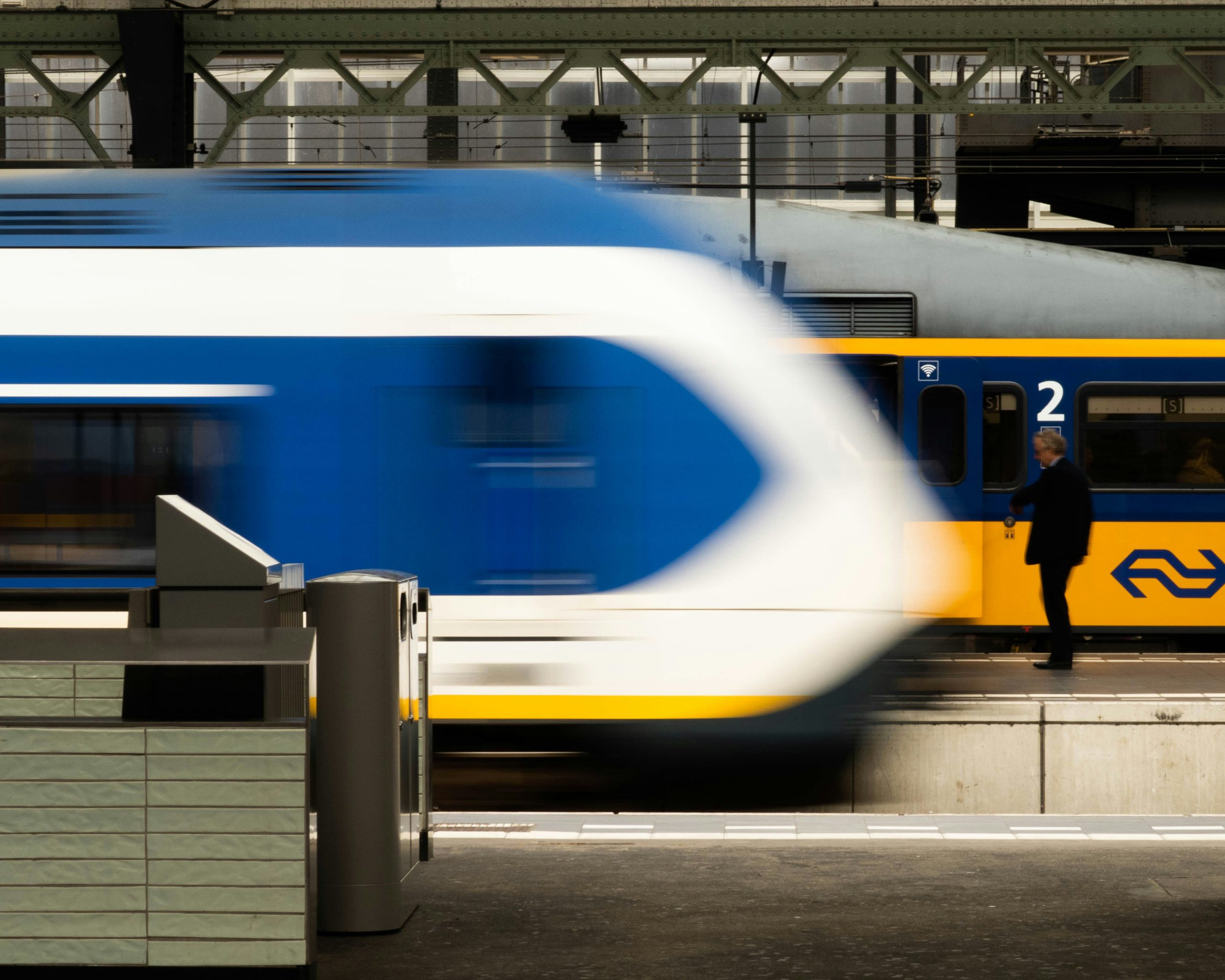
The Netherlands is one of the most efficient, connected, and punctual public transport networks in the world. Whether you are commuting between major cities like Amsterdam, Utrecht, Rotterdam, and The Hague, or exploring regional towns, you can comfortably live here without owning a car.
However, for newly arrived expats, understanding the payment systems, train types, and transport etiquette can feel a bit chaotic at first. This guide breaks down everything you need to know to navigate the Dutch public transport system with confidence.
The modes of transport:
The Dutch transport network seamlessly integrates several modes of travel into one system:
Trains (Trein)
Rail transport is largely used to travel between cities and regions. Nederlandse Spoorwegen (NS) is the national railway operator, alongside a few regional operators like Arriva, Keolis, and Transdev. You will encounter three primary types of trains:
- Intercity (IC): Fast, long-distance trains that stop only at main stations.
- Sprinter: Local trains that stop at every station along their route.
- Intercity direct: High-speed connections (e.g., between Amsterdam Central, Schiphol, and Rotterdam Central) that require a small additional fee (toeslag) on top of your regular fare.
Dutch trains offer both 1st class and 2nd class seating. Standard travel is 2nd class, while 1st class offers quieter compartments with wider seats and more depending on which train you are.
Trams, buses, and metros
- Buses: Connect suburban regions, villages, and city neighborhoods.
- Trams: Common in larger cities like Amsterdam, Rotterdam, The Hague, and Utrecht, offering a quick way to travel inner-city zones.
- Metros: Operating in Amsterdam and Rotterdam, metro lines are ideal for high-speed city travel.
Ferries & OV-fiets
- Ferries: Many waterfront routes feature public ferries. In Amsterdam, for instance, the GVB ferries connecting Central Station to Amsterdam Noord are completely free for pedestrians and cyclists.
- OV-fiets: Once you arrive at a train station, you will notice thousands of bright yellow-and-blue rental bicycles. Known as the OV-fiets, these allow you to rent a bike for a small fixed daily rate (around €4.50) using a personal pass.
Paying for your travel: OVpay vs. personal transit pass (OV-chipkaart)
Paying for public transport in the Netherlands is fully digital. Cash is not accepted on buses, trams, or trains, but you have two easy ways to pay depending on how often you travel:
- OVpay (Best for occasional travel & new arrivals): You don't need a physical travel card or paper ticket. Simply tap in and out at station gates or on board buses and trams using your contactless debit card, credit card, or smartphone (Apple/Google Pay). Your daily fares are debited directly from your bank account overnight, no top-up or pre-registration required.
- Personal Transit Pass (Best for daily commuters & long-term expats): If you plan to live in the Netherlands long-term, ordering a personalized transit pass (a Personal OV-chipkaart or OV-pas) is very useful. Linked directly to your Dutch bank account, this registered card unlocks monthly travel subscriptions (like 40% off off-peak travel), sets up auto-reloads so you never run out of balance, and is required to rent an OV-fiets the bright yellow and blue station bike we talked about earlier.
The golden rule: always check in and check out
Always check in at the start of your trip and check out at the end.
- At train & metro stations: Tap your card/phone on the card readers at the gates or standalone card poles on the platform before boarding.
- On buses & trams: Card readers are located directly inside the vehicle near the doors. Tap in when boarding and tap out right before you step off.
- Switching operators: Fares are distance-based. If you switch from a train to a bus, or from an NS train to a regional train (for example Arriva), you must check out with the first operator and check in with the second.
Warning: If you forget to check out, the system will charge a default boarding deposit (often €10 to €20) rather than your actual fare distance. The good news is you can request refunds for missed check-outs via the OVpay app or website.
Essential apps for journey planning
To navigate routes, platforms, delays, and transfer times smoothly, download these essential tools:
- 9292 (9292.nl): The door-to-door journey planner covering every train, tram, bus, metro, and ferry operator nationwide.
- NS App: The official app of the Dutch national railway. Ideal for real-time train schedules, platform changes, buying single e-tickets, and tracking how busy the trains are.
- Local operator apps: GVB (Amsterdam), RET (Rotterdam), and HTM (The Hague) offer localized route updates for urban public transport.
Tips for saving money & traveling smart
- Travel Off-Peak (Daluren): Travel during off-peak hours (typically weekdays before 06:30, between 09:00–16:00, and after 18:30, plus all day on weekends) to save up to 40% on train fares with an NS subscription.
- Silence compartments (Stiltezone): Look for the word "Stilte" or a headhone or shooshing icon on train windows. These are designated quiet zones where talking, phone calls, or loud music are not allowed.
- Bicycles on trains: You can bring a standard bicycle on the train during off-peak hours by purchasing a supplementary Bike Day Ticket (Fietskaart Dal). Folding bikes (vouwfietsen) can be brought aboard for free at any time if folded properly.
Mastering public transport is one of the fastest ways to start feeling like a local in the Netherlands, it seems like a lot, but if you start with it, it will start to feel usefull and less overwhelming very quick. When using public transport in the Netherlands, there are ususally always coductors, driving or info desks near if you have questions. If you have other questions about settling-in comfortably or about housing: feel free to contact us!